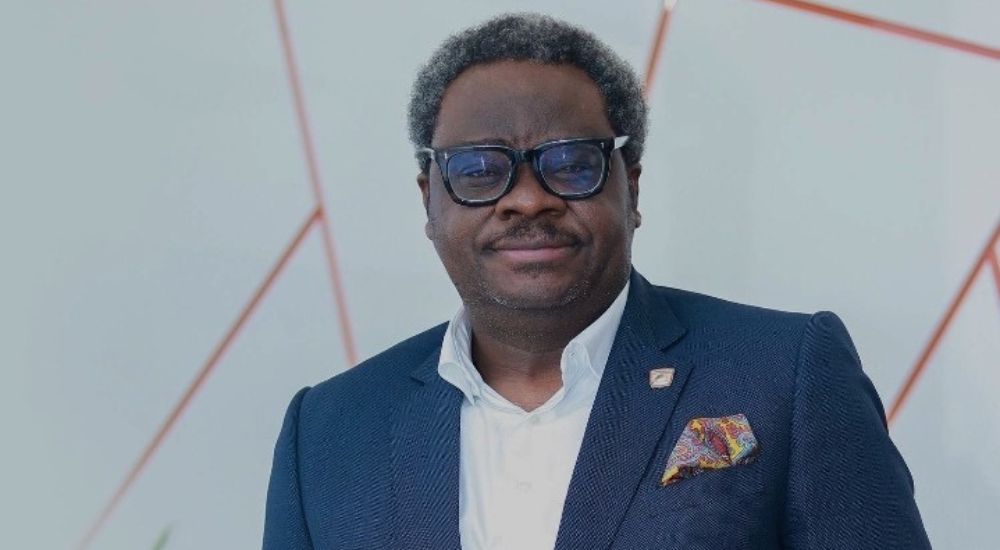
The Managing Director of Sahara Energy, Mr Kola Adesina, has warned that most Nigerian states lack the financial and technical capacity to develop electricity infrastructure despite the recent decentralization of the power sector.
THE WHISTLER had earlier reported that the Nigerian Electricity Regulatory Commission (NERC) had granted regulatory autonomy to 11 states, empowering them to oversee electricity markets within their jurisdictions in accordance with the Electricity Act (EA) 2023.
Also, according to the Forum of Commissioners for Power and Energy (FOCPEN), 23 states have already passed enabling laws to establish their electricity markets.
Adeshina cautioned that allowing subnational governments to drive power development without adequate resources and alignment with national policy could worsen inefficiencies in the sector.
He spoke on Thursday in Abuja during the technical session to mark the 20th anniversary of the Nigerian Electricity Regulatory Commission (NERC).
“The states don’t possess the wherewithal to build electricity infrastructure. Let’s call a state a state. They don’t have the resources. Now, when you are breaking down inefficiency into another level of inefficiency, you’re only spreading the virus,” Adeshina said.
The Sahara Energy boss emphasised that for Nigeria to attract new investments into the power industry, there must be policy stability, regulatory alignment, and visible commitment from leadership to address long-standing sector challenges.
“For an influx of investment to come, there is one thing required: the policy setting must be consistent. There must be stability in the system. We must see the hunger and the desire in the leadership to resolve the current problems that would engender more investment,” he said.
Speaking on the 2013 power sector privatisation, he lamented that private investors had yet to realise their initial expectations due to inconsistent policy implementation and regulatory uncertainty.
“When we came into this sector in 2013, our goal was to double the capacity we bought within five years. But 12 years later, we are still struggling, not for lack of ambition or desire, but because we haven’t gotten it right yet,” he noted.
On the approval of the ₦4tn payment to address inherited sector liabilities, Adesina stated that the funds must be strategically deployed to unlock investments and restore investor confidence.
“That ₦4tn is not a small amount of money by any stretch of imagination, but it will only be useful to the extent that it can truly unlock the possibilities that exist in the business of supplying power,” he said.
He called for alignment among all sector players, from gas suppliers to transmission companies and electricity distributors, through a unified national plan that clearly defines roles, responsibilities, and accountability.
“The people who will solve Nigeria’s electricity problem are Nigerians. Let’s protect and defend our local investors. The people who built America are Americans; the people who built Korea are Koreans,” he added.
He further identified widespread electricity theft, metering bypass, and the existing escrow payment arrangement in the market as major disincentives to investors, describing the escrow system as “a bad advert to international investors.”
Adesina urged stakeholders to use the NERC anniversary as a moment for reflection and renewal.