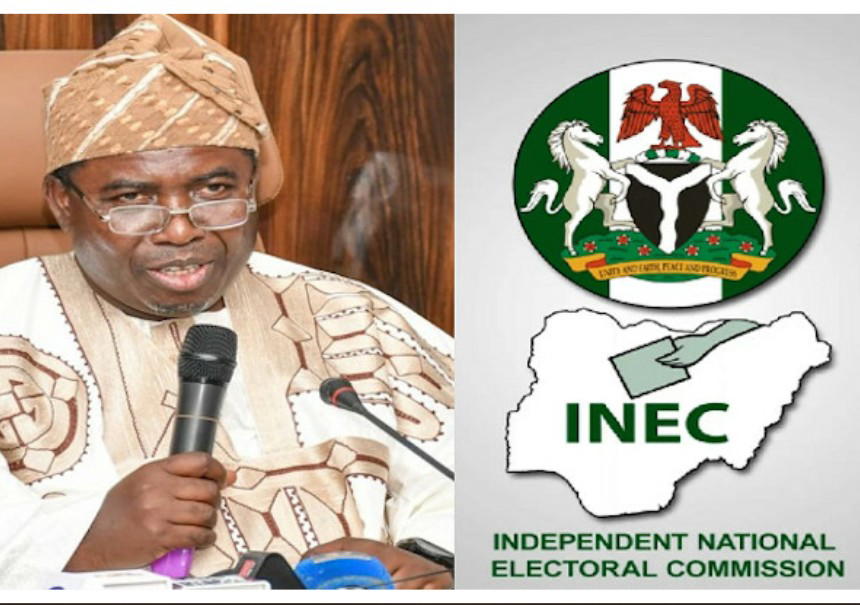
Nigeria must end dependence on govt to fund electricity sector — Presidential aide
By Obas Esiedesa, Abuja
Special Adviser to the President on Power, Dr. Lanre Babalola, has said Nigeria must end its long-standing dependence on Federal Government funding and interventions to sustain the electricity sector.
Babalola, who is also Chairman of the Presidential Task Force on Power Sector Reset and Restoration, said the sector must be restructured to attract private capital and operate on a commercially sustainable basis.
He spoke in a keynote address titled “From Market Survival to Market Sustainability: Resetting Nigeria’s Electricity Sector for Growth,” delivered at an event marking Dr. Joy Ogaji’s 15 years of service in Nigeria’s power sector and 10 years at the helm of the Association of Power Generation Companies (APGC).
The event also featured the public presentation of a book authored by Ogaji, titled “Powered by Purpose: Memoir of a Female CEO in a Male-Dominated Sector.”
According to Babalola, Nigeria’s electricity challenge is not simply a shortage of generation capacity, but the inability of the sector to consistently convert available capacity into reliable electricity, revenue and sustainable investment.
He said electricity generation only creates value when power can be generated, fuelled, evacuated, distributed, metered, billed, collected and ultimately paid for.
“When revenues are not collected, DisCos cannot meet their obligations. When GenCos are not paid, they cannot adequately maintain their plants or pay for gas. When gas suppliers are not paid, investment in gas supply suffers,” he said.
Babalola described the problem as a “value-chain liquidity problem”, stressing that electricity, gas and finance were interconnected and must be addressed as one economic system.
He said government interventions had helped keep the market functioning over the years, but warned that “keeping a market alive is not the same thing as making it sustainable.”
The presidential aide said government could no longer finance the electricity sector indefinitely, adding that its role should increasingly be to create conditions that allow private capital to invest and earn sustainable returns.
“Government intervention should create the market, not become the market,” he said.
According to him, investors would only commit capital when there is predictable regulation, credible contracts, payment security, reliable fuel supply, bankable offtake arrangements and transparent settlement.
He said the success of the sector reset should therefore be measured not only by government spending, but by the volume of investment the electricity market could attract without government absorbing all the commercial risks.
Babalola also called for greater utilisation of existing generation, transmission and distribution infrastructure before committing scarce capital to new projects.
He said viable power plants should be rehabilitated, transmission bottlenecks removed and distribution networks strengthened to enable greater electricity offtake.
“Our objective should not simply be more megawatts. It should be more value from every megawatt,” he said.
He urged stakeholders to identify why existing generation capacity is unavailable, constrained or stranded and address those barriers.
Babalola identified high technical, commercial and collection losses as major obstacles to the financial sustainability of the electricity market.
He called for granular monitoring of distribution networks to establish where losses occur, which feeders perform well, how much electricity is metered and billed, and how much revenue is ultimately collected.
While acknowledging the importance of metering, he said it must be accompanied by broader efforts to tackle technical, commercial and collection losses.
He also advocated reforms to electricity tariffs and subsidies, saying the gap between the cost of supplying electricity and what consumers pay has simply been transferred from one participant in the value chain to another.
He stressed that cost-reflective tariffs should not merely mean higher electricity prices, but should be accompanied by lower costs, improved efficiency, better service and stronger revenue collection.
Where government provides subsidies, he said they should be targeted, transparent and fully funded.
The presidential aide further called for Nigeria to complete its transition towards a competitive wholesale electricity market based increasingly on bilateral contracts between credible buyers and sellers.
He said the existing single-buyer model was conceived as a transitional mechanism and should not become a permanent structural constraint.
Babalola said the transition should be supported by direct contracts, payment security, firm gas arrangements, transparent network access, effective settlement systems and consequences for non-performance.
“Those who contract must have the capacity to pay. Those who sell must have the capacity to deliver. And those who fail to perform must bear the consequences,” he said.
He also called for integrated planning across gas, generation, transmission, distribution and electricity demand, arguing that power investments must be linked to productive economic activities.
According to him, electricity reform should support Nigeria’s industrialisation, agriculture, digital services, urban development and job creation.
Babalola said the ultimate objective of the reset was to move the sector from market survival to sustainability, from stranded assets to productive assets and, ultimately, from “managing scarcity to powering prosperity.”
Iledare seeks viable electricity market
In his remarks, energy economics expert Prof. Wumi Iledare observed that Nigeria’s power sector remained one of the country’s most consequential economic challenges and, at the same time, one of its greatest opportunities.
“The challenge is not simply about generating more electricity; it is about creating a financially viable and efficiently governed electricity market where investment is rewarded, contracts are respected, liquidity is sustained, and consumers ultimately receive reliable and affordable power,” Iledare said.
He praised Ogaji for her contribution to the power sector, describing her as an important voice in the Nigerian electricity industry, particularly in bringing the realities of the generation segment into national policy conversations.
According to him, Ogaji’s contribution goes beyond representing generating companies, as she has consistently challenged stakeholders to confront the fundamental economics of the power market.
The post Nigeria must end dependence on govt to fund electricity sector — Presidential aide appeared first on Vanguard News.