
Rising feed costs threaten poultry, livestock farming in 3 states
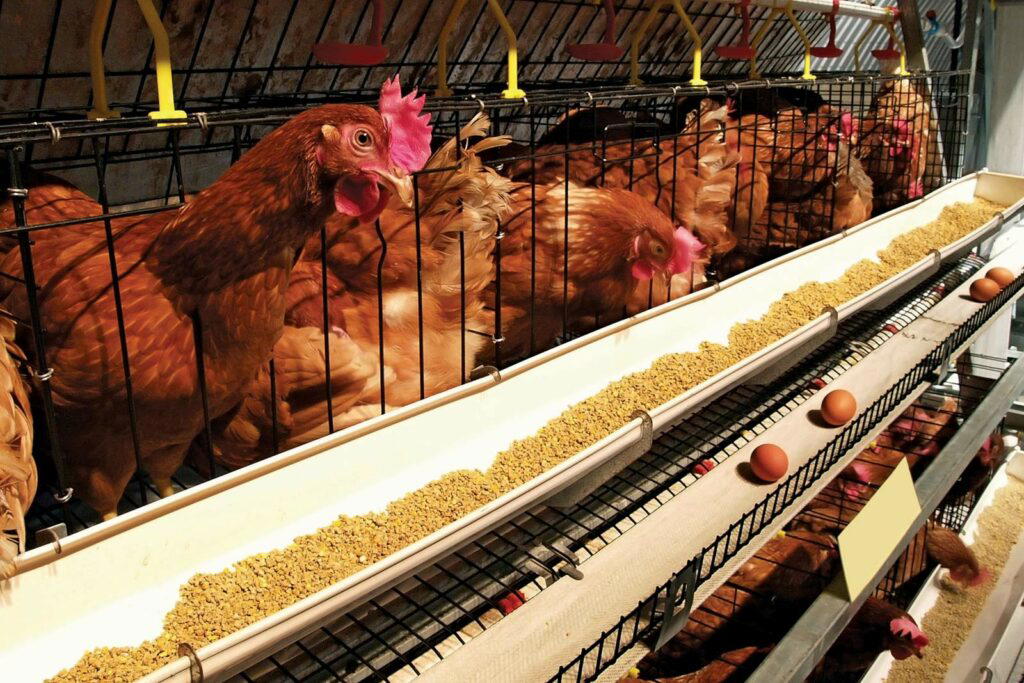
Farmers in Niger, Kogi and Nasarawa states have warned that rising feed costs, expensive day-old chicks and poor market prices threaten livestock production and livelihoods.
They said the situation had forced some operators to reduce production, sell their animals at losses or abandon farming altogether.
The farmers spoke in separate interviews with the News Agency of Nigeria on Tuesday during a nationwide survey in Minna.
They identified high feed costs, which account for 70 to 80 per cent of poultry production expenses, as their biggest challenge.
They called for subsidised feed ingredients, affordable financing, improved access to essential inputs and local feed mills to reduce production costs.
In Kogi, a poultry farmer and retired Federal Ministry of Agriculture and Food Security director, Mr Dare Olukaiyeja, said feeding accounted for 80 per cent of his production costs.
Olukaiyeja, who keeps 250 birds, said a crate of eggs currently sold for about N6,200 amid declining consumer purchasing power.
Similarly, Mr Shola Adeyi, a Lokoja-based farmer with a 1,000-bird capacity, said feed prices had increased by N2,000 to N3,000 per bag almost monthly since January.
He said starter, finisher and layer feeds sold for N22,500, N22,000 and N16,000 respectively, while day-old chicks cost about N2,200 each.
Adeyi identified unreliable electricity, extreme heat and high bird mortality as additional challenges confronting poultry farmers.
He said some operators had abandoned the business because they could not afford alternative power sources.
He said eggs sold for between N6,000 and N6,500 per crate, while broilers fetched N4,500 to N5,000 per kilogramme.
According to him, the prices barely covered production costs, necessitating long-term subsidised or interest-free loans and effective market regulation.
Another farmer, Mr Malik Ajayi, said day-old chick and feed prices usually increased during Sallah, Easter and Christmas.
Ajayi, who rears broilers, cockerels and foreign turkeys, said he recently bought three cartons of day-old chicks for N352,500.
He attributed some price fluctuations to possible exploitation by large-scale producers and urged the government to introduce effective price regulation.
Ajayi, who keeps 150 broilers, 50 cockerels and 15 foreign turkeys, said some farmers sold their birds cheaply to avoid prolonged feeding costs.
He added that frozen poultry dealers also faced high electricity and preservation expenses.
Mrs Oluwaseyi Fadaka, another Lokoja-based farmer, said a bag of feed now cost about N22,000, with her 40 Noiler birds consuming one regularly.
She said rising feeding costs were eroding profits, forcing farmers to sell at losses or abandon the business.
Fadaka said some smallholders were exploring organic feeding alternatives but needed government support through subsidised feed and affordable, quality inputs.
Responding, the Kogi Government said it was implementing interventions through the Livestock Productivity and Resilience Support Project (L-PRES).
The State Project Coordinator, Mr Abdulkabir Otaru, said the World Bank-supported project targeted productivity, commercialisation and resilience across livestock value chains.
He said the project recently supported 500 women and youths across the state’s 21 local government areas with poultry inputs and equipment.
Beneficiaries also received day-old chicks, feed, drugs, vaccines and N100,000 each for logistics support.
The Commissioner for Livestock Development, Dr Olufemi Bolarin, said the ministry was collaborating with L-PRES and stakeholders on sustainable solutions.
He said improved poultry breeds, including resilient, dual-purpose SASSO chickens, were being introduced to strengthen food security and farmers’ incomes.
Stakeholders called for subsidised maize and soya beans, local feed ingredient production and solar power support to reduce bird mortality.
In Niger, poultry farmers and feed dealers said rising feed, chick and transportation costs were threatening the sustainability of poultry businesses.
A NAN survey at Firduas Agrovet, a poultry feed and day-old chick dealership in Minna, revealed significant increases in poultry input prices.
The dealers attributed the increases largely to rising transportation costs, saying some feed prices had risen by about 40 per cent over the previous year.
They said a bag of layer feed, previously sold for N7,500 to N8,000, now cost about N15,000.
Broiler feed, formerly sold for approximately N18,000, had increased to N24,000, they added.
A day-old broiler chick sold for N2,200, while a layer chick cost about N3,500, with festive demand influencing prices.
The dealers said N500,000, which previously could sustain about 500 birds, could now cater for only approximately 100.
A poultry farmer, Mr Bala Ibrahim, said rising production costs and unstable market prices were making it difficult to sustain businesses.
He said feed constituted a significant proportion of production expenses, while fluctuating chick prices complicated financial planning.
Ibrahim said some operators had reduced their flock sizes, while others struggled to remain in business.
He said poultry sales frequently failed to cover feeding, medication, labour, transportation and other production expenses.
He urged the Niger government to reduce production costs and improve farmers’ access to affordable feed and essential inputs.
Responding, the Permanent Secretary, Niger Ministry for Livestock, Mr Jonathan Wasa, said the government planned to revive and upgrade the Tagwai feed mill.
He said the initiative was intended to improve local feed availability and reduce the financial pressure on livestock farmers.
Wasa said the ministry was collaborating with Niger Foods to facilitate the supply of raw materials for feed production.
He explained that feed transported from Kaduna and Ilorin was expensive because of additional transportation and distribution costs.
Establishing local feed production, he said, would reduce dependence on external supplies and improve accessibility.
Wasa said Niger had abundant raw materials for feed production, adding that the government was working to harness the resources.
He expressed optimism that upgrading the Tagwai facility would improve feed availability and reduce production costs when operations began.
He said the intervention would strengthen the livestock value chain and create opportunities for farmers and agricultural input suppliers.
In Nasarawa, livestock farmers also blamed rising feed costs and poor market prices for declining profitability and farm closures.
The farmers spoke to NAN in Lafia, citing rising maize and soya bean prices without corresponding increases in poultry product prices.
A poultry farmer, Mr Musa Ibrahim, said feed accounted for about 70 per cent of production expenses.
“The cost of feed constitutes about 70 per cent of production. We are buying feed at exorbitant prices but selling at a loss because consumers cannot afford high prices.
“Many of our members have closed their farms. If nothing is done urgently, poultry and livestock farming will collapse in the state,” he said.
Mrs Sarah Audu, a livestock farmer from Akwanga, said high feed costs had forced her to reduce her flock from 2,000 birds to 500.
She urged the state and federal governments to provide subsidised feed ingredients and establish feed mills.
Similarly, Alhaji Suleiman Danlami, a cattle fattener in Keffi, decried poor animal prices in spite of rising production costs.
“During festive periods we expect to make profit, but now even at Sallah and Christmas, prices are poor. Transportation cost is high, feed is high, but market price is low,” he said.
The farmers warned that without urgent interventions to reduce production costs and improve market conditions, more smallholder operators could abandon livestock farming.
They urged governments to strengthen local feed ingredient production, establish feed mills and provide affordable financing to sustain production and improve food security.
The post Rising feed costs threaten poultry, livestock farming in 3 states appeared first on Vanguard News.