How Online Scams Are Breaking Nigerians Financially
…EFCC Advises On How To Detect Scammers
On a rainy Friday afternoon in Lagos, Afeez Afolabi sat across from a customer service officer at her bank, tears welling in her eyes. Just two days earlier, her phone had been stolen. By the time she reported it, more than half a million naira had vanished from her account.
“I thought once I blocked my SIM card, everything would be fine. I didn’t know thieves could set up my mobile banking from my own phone and wipe me out completely,” she said.
Afolabi’s story is becoming increasingly common.
As Nigeria deepens its shift toward digital banking and cashless transactions, scammers are finding new ways to outwit unsuspecting customers. Banks have invested heavily in security systems, but officials admit the weakest link often lies with customers themselves.
A report by the Nigeria Inter-Bank Settlement System (NIBSS) revealed that financial institutions in Nigeria lost N52.26bn to fraud in 2024.
This represents a significant increase of N34.59bn compared to the N17.67bn recorded in 2023.
The report showed that the money lost to fraud increased by 196 per cent over the past five years, in parallel with the growth of financial transactions in the digital payments sector.
For years, fraudsters depended on impersonation calls—posing as bank staff, reeling off personal details, and persuading victims to reveal their one-time password (OTP) or PIN. Over time, Nigerians became more cautious, forcing criminals to adapt.
Today, scams take many forms. Fraudulent emails and text messages disguised as official bank communications are widespread, often threatening account suspension unless recipients “verify” their details. Others exploit public spaces: free Wi-Fi in coffee shops or lounges becomes a hunting ground where hackers intercept sensitive information. Logging into mobile banking or shopping online on unsecured networks exposes victims to identity theft and financial loss.
Biobele Ezekiel, a Port Harcourt-based banker, told THE WHISTLER that banks constantly warn customers never to share confidential details.
“The number one thing we tell customers is you don’t share your password, login details, or OTP with anyone, no matter how much you trust them,” she said. “Fraudsters have evolved from impersonation calls to malicious emails and links. People must stay alert.”
She added that scammers often use stolen phones to create USSD codes, giving them automatic access to transfer funds into e-wallets. “Once the money lands in a wallet, it’s usually moved instantly. Tracing it becomes extremely difficult,” she explained.
For victims like Oluchi, an NYSC corps member in Abuja, the losses come with shock and helplessness. She recalled receiving a call shortly after opening her account.
“They called my account number to me and said a code had been sent. I gave them the code, and they cleared my account. By the time I saw the debit alerts, it was too late,” she said.
For many, the next question is inevitable: “Can I get my money back?”
Ezekiel said recovery is possible but rare. “If the stolen funds are still in the receiving account, a court order can reverse the transaction. But once it’s moved to an e-wallet or withdrawn, it’s almost impossible,” she explained. In such cases, banks place a lien on the fraudster’s Bank Verification Number (BVN), blacklisting them across the system. “But for victims, that’s often small comfort,” she admitted.
The losses are not just financial. Victims describe feeling humiliated, frustrated, and traumatized. Many struggle with self-blame, asking how they could have “fallen for it.”
Bank officials stress that prevention remains the best—and often only—defense. The rules are simple but uncompromising: never share your password, PIN, or OTP with bank staff, friends, or family. Treat unsolicited emails and links with suspicion—if you didn’t request it, don’t click it. Report lost or stolen phones immediately and block accounts before fraudsters act. Regularly monitor transactions and update passwords.
“It’s your money and your responsibility to protect it,” Ezekiel said. “Once you’re scammed, recovery is extremely hard.”
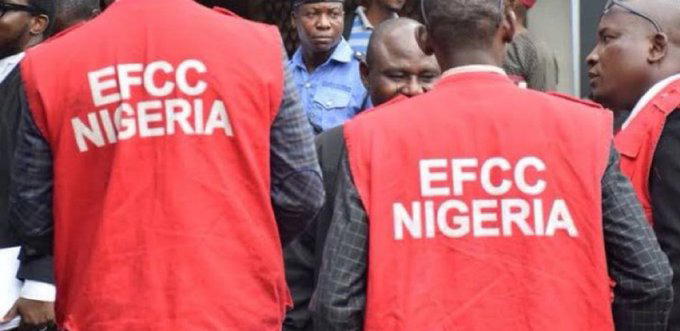
The Economic and Financial Crimes Commission (EFCC) had warned members of the public to be wary of fraudulent messages requesting them to update their bank accounts, stressing that such schemes are a common tactic deployed by cybercriminals to defraud unsuspecting individuals.
In an advisory released on its website, the anti-graft agency cautioned that banks and other financial institutions do not request personal identification details from customers through email, text messages, or phone calls.
According to the EFCC, once an individual responds to these deceptive requests, they risk losing money to scammers.
“Banks already have all the information they need about you. On no account should anyone disclose personal details such as login credentials, PINs or passwords to third parties,” the Commission stated.
The EFCC explained that many victims of e-commerce and card-related frauds fall prey through phishing and spoofing. In such schemes, criminals send emails using fake letterheads and logos of banks or pension fund managers, tricking individuals into believing the messages are authentic.
These fraudulent messages often contain threats that accounts will be closed unless customers “update” their details within a specified period.
“In some cases, victims are directed to websites designed to look like genuine banking platforms where they are asked to upload sensitive information. Once the details are provided, scammers swiftly gain access to the victims’ accounts and withdraw funds,” the Commission added.
The agency also warned of other variants of the scheme, including pet sales, car sales, and vacation rental scams, which rely on the same method of tricking individuals into surrendering their personal data.
To safeguard against such fraud, the EFCC advised Nigerians to always confirm the authenticity of any request by visiting or contacting their banks directly.
“Do not give out information about yourself to anyone you don’t know. Never respond to any mail you are unsure of its source,” the Commission stressed.
The EFCC further urged the public to remain vigilant, noting that carelessness with banking details has plunged many victims into financial distress.
How Online Scams Are Breaking Nigerians Financially is first published on The Whistler Newspaper