The Economic and Financial Crimes Commission (EFCC) dismantled a major internet fraud syndicate operating from a seven-story building in Victoria Island, Lagos.
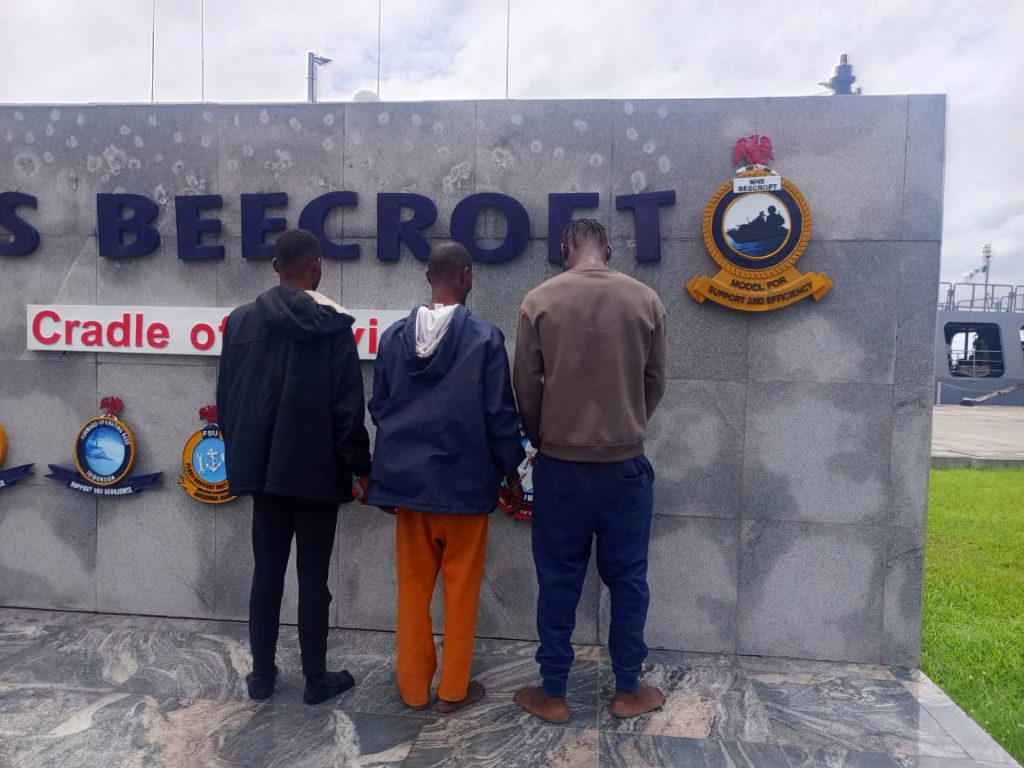
The operation, code named Eagle Flush, led to the arrest of over 700 suspects—194 of them foreign nationals—from Asia, Eastern Europe, and North Africa.
The EFCC’s Lagos Zonal Directorate initiated weeks of surveillance on the syndicate’s base at 7 Ujolayemi Street, a building known locally as the Big Leaf Building.
The investigation was spearheaded by Zonal Commander Abbah Sambo Usman and authorized by then-Zonal Director Michael Wetkas, uncovered a sophisticated network of scammers who had embedded themselves deep within Nigeria’s financial and digital infrastructure.
The EFCC Chairman Ola Olukoyede confirmed that operatives monitored the syndicate’s activities for three weeks before launching the raid on December 10, 2024.
“What we found was unlike anything we’ve seen before, This wasn’t just a local scam ring—it was an international operation using Nigerian soil as its base.”
The syndicate recruited members through online platforms and referrals, subjecting applicants to a typing test before assigning them fabricated digital identities. Each recruit created 10 to 15 fake profiles daily, engaging unsuspecting foreigners in romantic or investment scams.
Olukoyede noted that these criminals masked their IP addresses to appear as though they were operating from Europe or Asia, when in reality everything was being coordinated from Lagos.
During the raid, EFCC operatives recovered Over 3,000 SIM cards (both Nigerian and foreign) 1,500 desktop computers, Approximately 400 mobile phones.
The Legal and Prosecution Director Sylvanus Tahir (SAN) confirmed that as of July 25, 2024, a total of 183 suspects had been convicted, with seven cases pending. Over 100 convicted foreign nationals have already been deported in collaboration with the Nigerian Immigration Service.
Tahir revealed that suspects face charges ranging from cybercrime and identity theft to cyberterrorism, with some opting for plea bargains and others proceeding to full trial.
He stated that the syndicate distributed scam proceeds across the building’s different floors, with bonuses awarded based on the size of successful scams.
Olukoyede stated that this case shows that cybercrime is not a uniquely Nigerian problem, foreign nationals were deeply involved, and in many cases, they were the masterminds.
The EFCC chairman Olukoyede praised President Bola Ahmed Tinubu for providing the political and logistical support that enabled the Commission to carry out the complex operation.
“The President’s support has given us the tools we need to take on large-scale cybercrime. We’re not just sending a message—we’re backing it with action,” he said.
Olukoyede urged Nigerian youths to resist the lure of internet fraud and instead pursue legitimate avenues for success. He warned that the EFCC will continue its 24/7 operations to stamp out cybercrime in all its forms.
“This operation restores confidence in Nigeria’s resolve to fight financial crime, Cybercriminals will find no safe haven here.”he said.