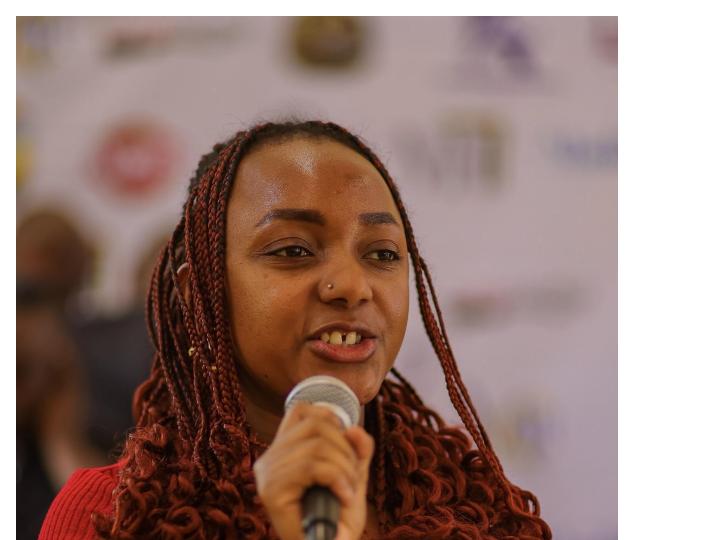
Poetry can exist on a page, but spoken poetry demands something different from its performer. The poet must translate written language into voice, rhythm, movement, silence and emotional presence. At Ilú, a cultural event organised by Adebisi Samuel, known as Kornerstone and held at Bushmead Community Hub in Luton recently, Irene Agbo demonstrated the distinctive possibilities of poetry as a live performance form. Agbo’s appearance contributed a literary dimension to an event otherwise characterised by a range of performing-arts disciplines. Her performance demonstrated how poetry can occupy the space between literature and theatre, transforming language into an immediate encounter between artist and audience. The effectiveness of spoken poetry often depends on delivery as much as the words themselves. Pace, pauses, vocal emphasis and physical presence can change how an audience receives a poem. Agbo’s performance drew attention to these elements, allowing the poetry to function not simply as text but as performance. This is particularly significant within the context of African and diaspora arts in Britain. Oral storytelling has long played an important role in African cultural expression. Contemporary spoken-word artists inherit aspects of that tradition while adapting them to modern stages, audiences and social contexts. The outcome is often an artistic form capable of connecting personal experience with wider questions of identity, culture and belonging. Agbo’s poetry contribution to Ilú sat within this wider tradition while remaining distinctly contemporary. One of the significances of her performance was the intimacy created through the spoken word. Unlike some performance forms that depend heavily on spectacle, poetry can place the performer and audience in a remarkably direct relationship. The audience is asked to listen closely, interpret language and engage with ideas. That intimacy is one of poetry’s greatest strengths as a live art form. Agbo also benefited from the wider structure of Ilú. Positioned alongside live music and other forms of performance, her poetry became part of a broader conversation about how different art forms can express culture and experience. Her appearance demonstrated that poetry can sit comfortably alongside music, theatre and other live disciplines while retaining its own artistic identity. On her choice of poetry as her artistic language, Irene Agbo said: “Poetry gives me the freedom to explore ideas and emotions through language. I can tell a story, express an experience or make people think through a relatively small number of words.” According to her, with poetry, the audience becomes part of the experience. “Your voice, pauses, expression and presence all become part of the poem. It becomes more than something that is simply read,” she said. “I wanted people to connect with the words in their own way. Poetry can mean different things to different people, so I like leaving room for the audience to find their own connection with it.” Agbo observed that spoken-word poetry within the UK’s African arts scene holds a lot of potential, as there are many African poets and storytellers in the UK with experiences that deserve to be heard. Spoken word gives us a powerful platform to tell those stories. Irene Agbo’s artistic contribution to Ilú demonstrated the capacity of poetry to function as a compelling live performance discipline. Her performance reinforced the relationship between literature, oral tradition and contemporary stage practice, while contributing an important spoken-word voice to a multidisciplinary programme.