Dangote Refinery Quietly Withdraws ₦100 Billion Lawsuit Against Oil Marketers, NNPC

The Dangote Petroleum Refinery and Petrochemicals has officially dropped a major legal case involving ₦100 billion in claims against the Nigerian National Petroleum Company Limited (NNPC Ltd), AYM Shafa Ltd, and A.A. Rano Ltd.
The case, originally filed in September 2024, was dismissed without explanation, following a court notice signed on July 28, 2025, by Senior Advocate of Nigeria (SAN) Ogwu James Onoja, who represented Dangote Refinery. The terse court document simply stated, “Take notice that the plaintiff herein discontinues this suit against the defendants forthwith.”
The unexpected move has left industry watchers and stakeholders speculating over whether an out-of-court settlement or strategic shift prompted the withdrawal.
The now-discontinued lawsuit had been filed at the Federal High Court in Abuja under suit number FHC/ABJ/CS/1324/2024. It stemmed from Dangote’s concerns that import licenses granted by the Nigerian Midstream and Downstream Petroleum Regulatory Authority (NMDPRA) to competitors, including NNPC Ltd, violated provisions of the Petroleum Industry Act (PIA). According to the refinery, Sections 317(8) and (9) of the PIA stipulate that such licenses should only be issued in cases of local supply shortages.
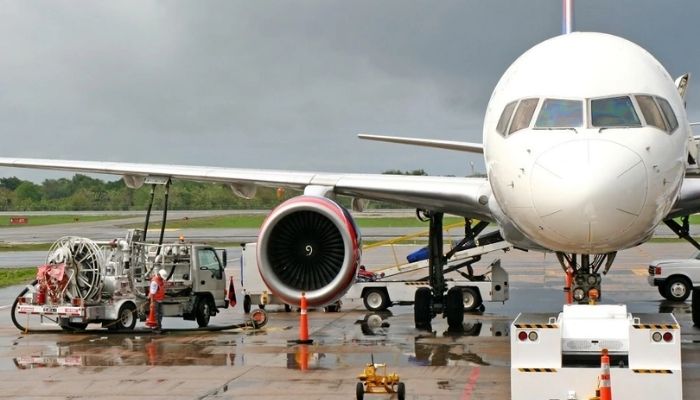
Dangote argued that its refinery—launched in 2024 and capable of refining up to 650,000 barrels per day—should be prioritised over imports. It claimed the issuance of licenses undermined domestic refining, contrary to the spirit of petroleum reform legislation.
The defence, led by legal luminary Ahmed Raji, SAN, rejected Dangote’s arguments, describing them as monopolistic and unjustified. The marketers contended that the Dangote Refinery alone could not meet the nation’s fuel needs and that their licenses were lawfully obtained under the same PIA framework.
Regulatory official Idris Musa of NMDPRA also submitted an affidavit defending the agency’s actions, emphasising that the refinery’s output was insufficient to guarantee fuel security and market stability. Musa denied any form of conspiracy and insisted that the goal was to maintain healthy competition while safeguarding consumer access.
At one point, Dangote sought to amend the case due to a clerical error, having named “Nigeria National Petroleum Corporation Ltd” instead of the correct “Nigerian National Petroleum Company Ltd.” Though the defendants raised procedural objections, Justice Inyang Ekwo ruled that the misnaming was not sufficient grounds for dismissal and permitted Dangote to correct its filings.
The matter had been set for hearing on September 29, 2025. However, at the July court session, lead counsel George Ibrahim, SAN, requested an adjournment to finalise submissions.
The abrupt withdrawal of the case suggests possible reconciliation behind closed doors, though no official clarification has been offered. Speculation continues as to whether the decision stemmed from strategic realignment, negotiations with the government, or commercial considerations.
The broader dispute underscores ongoing tensions in Nigeria’s downstream petroleum sector, where issues surrounding import dependency, refining capacity, and market liberalisation remain deeply contentious.