
Global Hunger Dips Slightly to 8.2% in 2024, Affecting 673 million People
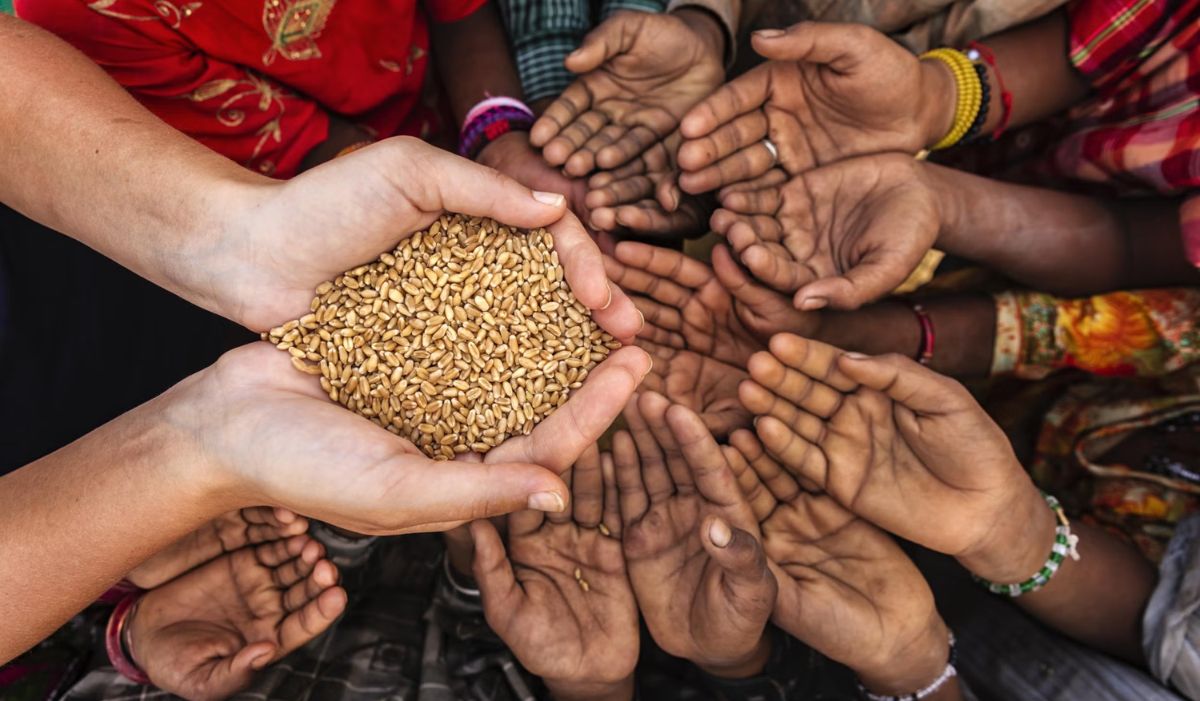
New figures show that approximately 8.2% of the world’s population—around 673 million people—experienced hunger in 2024, marking a slight decline from 8.5% in 2023 and 8.7% in 2022.
Despite this global drop, the gains are uneven, with Africa and parts of Western Asia witnessing worsening hunger levels.
This update was released by the United Nations in the State of Food Security and Nutrition in the World (SOFI) 2025 report, jointly published by five UN agencies, including FAO, IFAD, UNICEF, WFP, and WHO.
According to the findings, hunger remains alarmingly high in Africa, where over 20% of the population—approximately 307 million people—were affected in 2024. In Western Asia, over 12.7% of the region’s population, or about 39 million people, also experienced hunger.
Projections within the report indicate that up to 512 million people could remain chronically undernourished by 2030 if current trends persist. Of this number, nearly 60% would be located in Africa.
The report was unveiled during the second UN Food Systems Summit Stocktake (UNFSS+4) in Addis Ababa, Ethiopia, and it paints a sobering picture of global food insecurity despite recent progress.
Between 638 and 720 million people were estimated to have faced hunger in 2024. The midpoint figure of 673 million marks a reduction of 15 million compared to 2023 and 22 million fewer than in 2022. However, these numbers remain above pre-pandemic levels, driven partly by food inflation and economic instability.
The report noted: “Notable improvements are seen in southern Asia and Latin America. The prevalence of undernourishment (PoU) in Asia fell from 7.9% in 2022 to 6.7%, or 323 million people, in 2024. Additionally, Latin America and the Caribbean as a region saw the PoU fall to 5.1%, or 34 million people, in 2024, down from a peak of 6.1% in 2020.”
However, these improvements contrast sharply with the continued rise of hunger in Africa and Western Asia, especially in conflict-affected regions.
Global food insecurity, including moderate or severe forms, affected 28.0% of the world population in 2024, translating to 2.3 billion people. While this is slightly lower than the 28.4% recorded in 2023, it remains 335 million more than pre-COVID-19 levels and 683 million above the baseline year of 2015, when the Sustainable Development Goals were adopted.
FAO Director-General QU Dongyu remarked, “While it is encouraging to see a decrease in the global hunger rate, we must recognise that progress is uneven. SOFI 2025 serves as a critical reminder that we need to intensify efforts to ensure that everyone has access to sufficient, safe, and nutritious food. To achieve this, we must work collaboratively and innovatively with governments, organisations, and communities to address the specific challenges faced by vulnerable populations, especially in regions where hunger remains persistent.”
IFAD President Alvaro Lario added, “In times of rising food prices and disrupted global value chains, we must step up our investments in rural and agricultural transformation. These investments are not only essential for ensuring food and nutrition security – they are also critical for global stability.”
UNICEF Executive Director Catherine Russell said, “Every child deserves the chance to grow and thrive. Yet over 190 million children under the age of 5 are affected by undernutrition, which can have negative consequences for their physical and mental development. This robs them of the chance to live to their fullest potential.”
WFP Executive Director Cindy McCain warned, “Hunger remains at alarming levels, yet the funding needed to tackle it is falling. Last year, WFP reached 124 million people with lifesaving food assistance. This year, funding cuts of up to 40 per cent mean that tens of millions of people will lose the vital lifeline we provide.”
WHO Director-General Tedros Adhanom Ghebreyesus noted, “In recent years, the world has made good progress in reducing stunting and supporting exclusive breastfeeding, but there is still much to be done to relieve millions of people from the burdens of food insecurity and malnutrition.”
The report also highlights several nutritional trends: child stunting decreased from 26.4% in 2012 to 23.2% in 2024, while rates of wasting and child overweight remained relatively unchanged. Exclusive breastfeeding for infants under six months improved significantly from 37.0% in 2012 to 47.8% in 2023. Meanwhile, adult obesity rose to 15.8% by 2022, and anaemia among women aged 15 to 49 increased to 30.7% by 2023.
SOFI 2025 attributes recent food inflation to policy reactions during the COVID-19 crisis, Russia’s invasion of Ukraine, and extreme weather, all of which compounded global supply chain pressures.