Dangote Predicts Stronger Naira as Reforms Boost Market Confidence
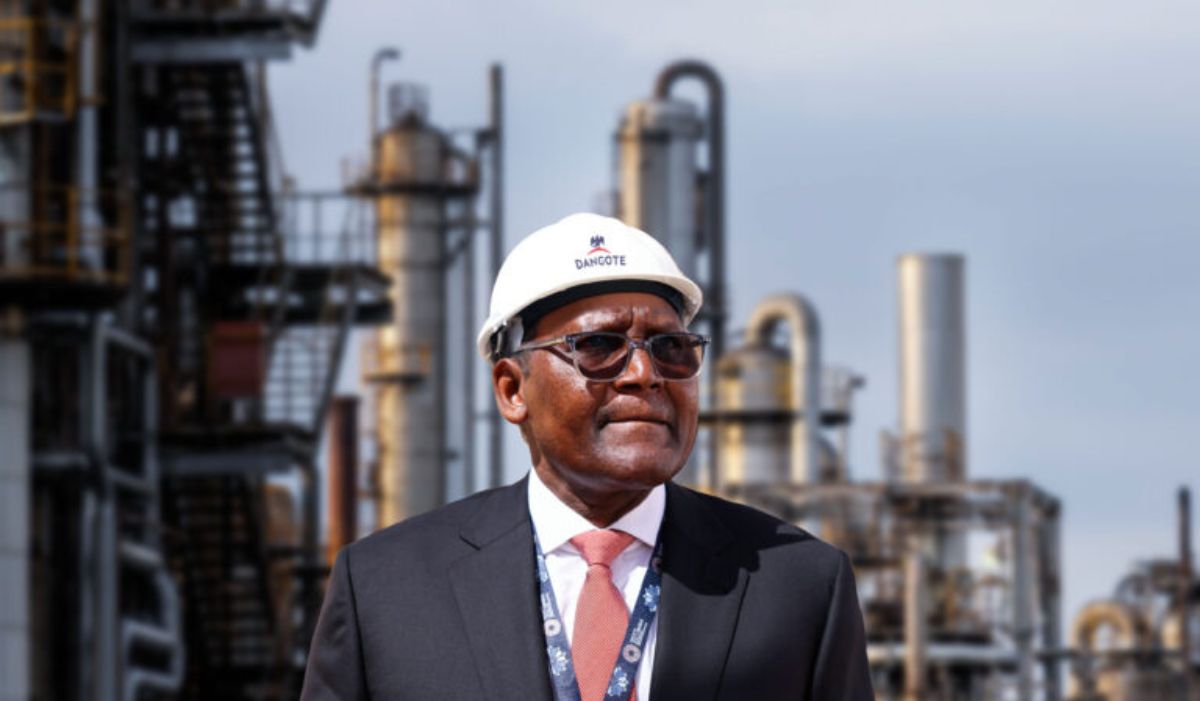
Africa’s wealthiest man and Chairman of Dangote Group, Aliko Dangote, has expressed optimism that Nigeria’s exchange rate will improve as economic reforms and market dynamics begin to yield results.
Dangote made this known during a recent inspection visit by the Minister of Industry, Trade and Investment, Dr. Jumoke Oduwole, to the $20 billion Dangote Petroleum Refinery & Petrochemicals and the Dangote Fertiliser Complex located in Ibeju-Lekki, Lagos.
He credited the relative stability in the foreign exchange market to a mix of government policy actions and monetary interventions, which he said are beginning to foster confidence and predictability for businesses.
He acknowledged that the naira’s recent performance against the dollar has been more stable, noting that this trend has positively impacted business operations.
Dangote also lauded President Bola Tinubu, describing him as a responsive leader whose initiatives are gradually reviving investor trust in the Nigerian economy.
He praised the President’s commitment to ensuring consistent crude supply to local refineries and commended the introduction of the “Naira-for-Crude” exchange mechanism and the “Nigeria First” policy.
He said, “I believe we must sincerely thank His Excellency, President Bola Ahmed Tinubu, for ensuring that there have been improvements in the supply of crude oil. His insistence that all crude oil transactions be conducted in naira has been particularly commendable. For us to effectively meet market demand—which we have the capacity to do—it is essential that crude is priced and purchased in our local currency.”
Dangote noted that the broader reforms have contributed to reducing volatility in the naira-dollar exchange rate and stated his confidence that the naira could strengthen further as these policies continue to take effect.
He further explained that greater predictability in the exchange market is now enabling investors to make informed decisions with more clarity.
He said, “We are also beginning to see some stability in the naira-to-dollar exchange rate, which has had a positive impact. There is now less fluctuation, and this has brought a degree of predictability to the market. For those of us in the business sector, this is a welcome development, as it allows us to plan more effectively. Looking ahead, as market conditions continue to improve, we can expect to see a more favourable exchange rate.”
The business mogul also expressed satisfaction with the Federal Government’s launch of the One-Stop Shop (OSS) for improving coordination among regulatory and maritime agencies, a move he described as pivotal in reducing operational hurdles for industries participating in the Naira-for-Crude scheme.
He said, “The administration of His Excellency, President Bola Ahmed Tinubu, has established a One-Stop Shop that is working diligently. I am confident that the government intends to replicate this model in other sectors, particularly to streamline the clearing of goods, an essential area of business. At present, we are not experiencing any significant issues with loading. All the relevant agencies have been brought together under one roof, including the Navy, NIMASA, NPA, and others. This coordination has greatly improved efficiency. Whenever issues arise, they are promptly addressed through the leadership of the Chairman of the Technical Committee, Mr Zack Adedeji, who is doing an excellent job.”
Earlier, Dangote had urged the President to halt the importation of refined petroleum products to support domestic refining under the “Nigeria First” strategy. However, this proposal met opposition from petroleum marketers and sector analysts.
The policy in question mandates that all government agencies prioritise locally produced goods and services, and in May, President Tinubu officially prohibited public institutions from importing items readily available within the country.
According to Dangote, continuous fuel imports are stifling the growth of local refineries and discouraging investments that could help Nigeria achieve energy independence.